

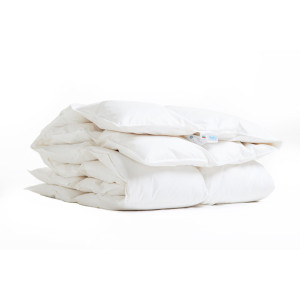





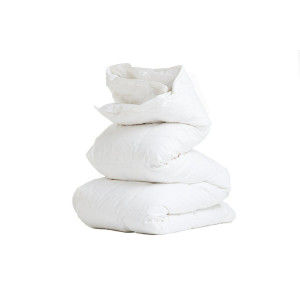

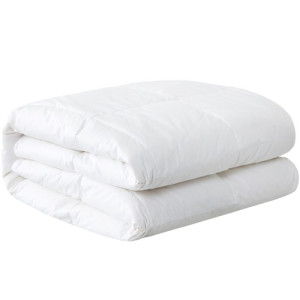
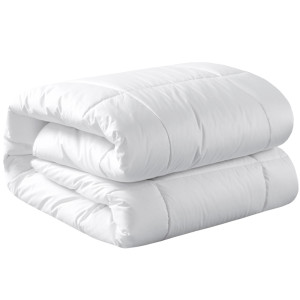
Few things create such comfort and a sense of luxury as a luxurious goose down duvet. Poohy duvets are just that - luxurious, lightweight, pleasant to the touch, hypoallergenic and easy to maintain.
From this wonderful collection, you can choose a warm duvet for winter or a lighter spring-autumn model. We even offer summer options for a soft embrace that insulates well without overheating.
What is the difference between goose and duck down?
The duvets included in this section are filled with high-quality Polish and Hungarian goose down. In some products, down represents 100% of the filling, while in others it is combined with a different percentage of new white feathers. It is logical to ask yourself what is the difference between goose down and duck down, so let us explain...
Goose down and duck down are the two most commonly used natural fillings in the production of luxury duvets, but there are significant differences between them that affect the quality of the product itself and the comfort it gives to the user. The main difference is in the structure and properties of the down itself.
Goose down has larger and stronger clusters compared to duck down, which allows it to retain more air and provide better thermal insulation. This means that duvets filled with goose down are warmer, but at the same time lighter and more airy.
Another important advantage of goose down is its higher fill power. Goose down usually reaches values between 600 and 900 cuin, while duck down rarely exceeds 650. This makes goose down duvets fluffier and have better thermoregulatory properties.
Goose down has less residual fat and therefore has a weaker smell compared to duck down. Duck down can retain a certain aroma, especially with lower quality raw material processing, while goose down remains more neutral in smell. This difference is important for people with a sensitive sense of smell or a tendency to allergies.
Down from special breeds of Polish and Hungarian geese has a longer lifespan. A quality lightweight goose down duvet can maintain its volume and properties for decades, as long as it is properly maintained. Duck down duvets, on the other hand, can lose their volume and insulating properties more quickly, especially with low-quality raw materials and poor duvet construction.
What is the difference between 100% down and a blend of down and feathers?
If you are considering purchasing a goose down duvet and are browsing our products, you may be wondering what the difference is between products made with 100% down filling and those with a small percentage of feathers. The difference lies mainly in the softness, lightness and thermal insulation properties of the two types of products.
100% down duvets are extremely light, fluffy and effective at retaining heat, as the down clusters trap a large amount of air, creating natural insulation. This makes them more comfortable and suitable for people who like the feeling of wrapped warmth, but not excessive weight on the body.
On the other hand, duvets filled with a mixture of down and 10% feathers are slightly heavier and denser. Although 90% of the down content provides good thermal insulation properties, the presence of feathers makes the duvet a little stiffer. Feathers add some structure, which is a sought-after effect by many. There are people who will appreciate the presence of feathers in the duvet, as they provide a closer fit of the duvet to the body.
100% down duvets usually have a longer lifespan, because the down clusters do not fluff up as easily as feathers. This means that they retain their volume and thermal insulation properties for a longer period of time. Duvets with a minimal percentage of feathers will also not lose their downy texture, especially if they are properly maintained.
Price is an important factor in down fillings. For example, a duvet made of goose down will have a higher price than a model with a mixed filling, as the production and selection of high-quality down requires more resources. Duvets containing feathers are more affordable and can be a compromise option for buyers looking for quality, but at a lower price.
Distinctive features of a quality down duvet
A quality down duvet is synonymous with comfort, warmth and luxurious bedding. Choosing such a product requires attention to several key characteristics that determine its effectiveness and strength. The best models are distinguished by exceptional lightness, high insulating properties, proper filling distribution and a high-quality case. Each of these aspects affects how warm and practical the duvet will be in everyday use.
Lightness of the quilt
One of the main advantages of a quality down duvet is its lightness. Goose down has the amazing ability to provide warmth without adding extra weight. This is due to the structure of the small feathers - their grape-like structure retains large amounts of air, creating natural insulation.
High-quality goose down duvets have a high fill power, ranging from 700 to 850 cuin. The higher this value, the fluffier and lighter the duvet will be without losing its ability to keep you warm. Duvets with low-quality down or feather impurities tend to be heavier, which can reduce comfort during sleep.
Insulating properties
Thermal insulation is one of the most important features of a good down duvet. Goose down is known for its excellent ability to retain heat while allowing air to circulate freely, preventing overheating. Quality goose down duvets provide natural thermoregulation, which means they can be used in different seasons.
They retain heat during cold nights, but also allow the body to "breathe", preventing sweating. It is also important to pay attention to the down to feather ratio - duvets with 100% or at least 90% down and 10% feathers are the most effective in this regard.
Product structure and correct distribution of the filling
One of the most common concerns with down comforters is uneven filling distribution, which can lead to shifting and cold spots. High-quality comforters are made using a special baffle box stitching, in which the down is distributed into individual chambers.
This design prevents the filling from bunching up in certain areas and ensures even warmth across the entire surface of the comforter. Cheaper comforters often have a simpler type of stitching, which does not provide the same level of filling uniformity and can lead to ineffective thermal insulation.
Duvet case quality
The cover of a goose down duvet is just as important a quality certificate as the filling. Our best models are "covered" with a finely woven cotton percale with 280 – 300 thread count. The fine weave makes the fabric impenetrable to small, fine feathers or "downproof" - that is, it prevents the down from escaping. This is extremely important, because even the best down duvet will lose its effectiveness if the down starts to leak out of the cover.
In addition, cotton percale is soft and pleasant to the touch, while allowing the duvet to "breathe", which improves comfort during sleep. Duvets with looser weaves or synthetic covers are not as effective at retaining the down and can lead to loss of fill over time, as well as the appearance of allergies in more sensitive individuals.
A quality lightweight goose down duvet is a lining that delivers incredible comfort and ideal conditions for a restful and healthy sleep. All of the above qualities of a good down duvet work in sync to create a product that guarantees unparalleled warmth and long-lasting use.
What is "Fill Power" and how does it affect the warmth of the duvet?
When choosing a goose down pillow or duvet, buyers are often faced with technical parameters that they do not fully understand. One of them is the Fill Power - an indicator of the quality of the down, used to determine its volumetric capacity and ability to hold air. This indicator is measured in cubic inches (cuin) and shows how many cubic inches one ounce (28.35 g) of down can fill. The higher the value, the more voluminous and effective the fill is at retaining heat. FP values usually range between 400 and 900 cuin, with high-quality goose down starting at 600 and above.
Fill power largely determines how warm a duvet will be, as the volume of the down determines how much air can be held between its feathers. Air is a natural insulator, while down acts as a capsule that holds it in. Duvets with a higher fill power transmit more heat at a lower weight, as larger down clusters create better insulation. This means that if the goose down available in a single duvet is with a Fill Power of 800, then it will be lighter and just as warm as a heavier model with an FP of 500.
In addition to affecting warmth, fill power also determines the durability of the duvet. A higher index means a more durable down that maintains its shape and volume for a longer period of time. Duvets with a lower FP can flatten and lose some of their thermal insulation properties after several years of use.
Fill power is a particularly important factor when choosing a down duvet for different climates. Duvets with values of 600 to 700 cuin are suitable for moderate temperatures, while those with 800 and above are ideal for cold climates or unheated bedrooms. This characteristic makes duvets unique in their ability to provide the optimal balance between warmth, lightness and durability.
What is the ideal duvet weight for different climate conditions?
Among other important features, such as size, type of filling and fill power, when buying a goose down duvet, you should also pay attention to the weight. How much a product weighs determines its seasonal affiliation. Personal preferences of users are also decisive - some prefer heavier and warmer duvets, while others choose airy lightness.
For cold winter nights, it is recommended that the duvet cover has a higher fill weight, while for warmer seasons or well-heated rooms, it is better to choose a lighter model. In regions with cold climates, where temperatures drop significantly in winter, duvets with a fill weight of around 300-400 grams per square meter offer excellent insulation.
Our winter lightweight goose down duvets provide maximum warmth without being too heavy, thanks to the high quality of the down, which traps air and creates a natural barrier against the cold. Combined with a high fill power (over 800), they are ideal for people looking for an extremely warm and comfortable duvet.
For the transitional seasons of spring and autumn, as well as for heated bedrooms, our lightweight goose down duvets weighing between 200 and 300 grams per square meter are a good choice. They offer an excellent balance between warmth and breathability, preventing the body from sweating and overheating at night. This makes them suitable for year-round use in areas with mild winters and cool summer nights.
For the warmer months of the year and for those of you who are always warm, options that weigh less than 200 grams per square meter are the best solution. They offer lightness and comfort, as they do not accumulate excessive heat. The lightweight goose down duvet cover is ideal for areas with hot summers or as an addition to a thicker duvet in winter.
What are the advantages of goose down duvets over synthetic options in terms of warmth and comfort?
Goose down duvets are available at a higher price than synthetic bedding, but we cannot compare the characteristics of the two types of products. Down duvets have significant advantages over synthetics, especially when it comes to warmth and comfort. One of their most important properties is the natural thermoregulation they provide. Goose down has the unique ability to retain heat without creating a feeling of heaviness, thanks to its unique structure.
The down clusters create air pockets that act as an insulating layer between the sleeper's body and the environment, maintaining an optimal temperature throughout the night. In cold weather, they keep the body warm, and on warmer nights, they allow air to circulate, preventing overheating and sweating. In terms of comfort, goose down duvets are extremely light and fluffy, providing a feeling of softness and comfort. Compared to synthetic products, which are sometimes heavier and harder, natural down creates an exceptionally soft and pleasant feeling on the body. In addition, synthetic fillings cannot reproduce the same degree of adaptability – they either accumulate too much heat or fail to provide optimal insulation in lower temperatures.
Another important advantage of a goose down duvet is its durability. High-quality down products can last for decades if properly maintained, while synthetics usually lose their shape and insulating properties after several years of use. Down also retains its volume better and does not flatten as quickly, which means that the duvet remains fluffy and comfortable for a long time. Although synthetic duvets are cheaper and easier to maintain, they do not offer the same luxurious feeling, warmth and lightness that goose down offers. Our down products are created for true connoisseurs of high-quality and luxurious bedding. Their level of comfort is unmatched among artificial fillings.
Is down filling suitable for people with allergies?
Goose down duvets have traditionally been considered a potential cause of allergies, but modern technologies in down processing significantly reduce this risk. A true allergy to the down itself is extremely rare; more often, allergic reactions are due to dust mites and the accumulation of organic residues in the filling.
At Poohy, we apply advanced methods of processing down, including eight-fold washing and high-temperature sterilization. These processes remove all organic residues and dust, which makes the filling hypoallergenic and suitable for both people with sensitive skin and young children.
To avoid any risk of side effects, each of our down duvets is covered with anti-mite fabric that prevents the growth of dust mites in the filling. Our duvets have covers made of 100% cotton percale with a density of 280 threads, classified as downproof. This fabric prevents dust mites from entering and the filling from escaping, further reducing the risk of allergic reactions.
The Oeko-Tex Standard 100 Class 1 certification certifies the absence of harmful substances in our products, which is especially important for people with allergies and sensitive skin. Both the fabric cover and the filling are certified according to this standard, which gives our customers complete confidence that our products do not contain hazardous substances and potentially toxic chemicals.
Certification - why is it important for natural down products?
Certification according to Oeko-Tex Standard 100, Class 1 is extremely important for natural down products, because it guarantees the safety of the materials used in the production of each of our goose down duvets. This standard certifies that the product does not contain harmful substances such as heavy metals, formaldehyde, pesticides and other chemicals that can cause allergies or skin irritations.
Class 1 is the strictest category in the Oeko-Tex system, which means that the down used in the soft duvet is completely safe even for babies and toddlers. This is especially important for down-filled products, as these raw materials come into direct contact with the skin for long periods of time during sleep. The down goes through various cleaning and processing processes, and the certificate ensures that no toxic or skin-irritating substances are used in these processes.
For consumers, this certificate is a sign of high quality and safety, which makes our products even more reliable and preferable. Duvets and pillows certified according to Oeko-Tex Standard 100, class 1 offer not only comfort, but also peace of mind that they are environmentally friendly and healthy.
Down duvet care – cleaning, maintenance, storage
Your winter down duvets, made with great care by us, need special care to maintain their volume and thermal insulation properties, so that you can enjoy your investment as much as possible. Proper cleaning and drying, regular maintenance and proper storage are the keys to their long-term use.
Duvets should be washed infrequently, as frequent washing can damage the down filling. It is recommended to wash duvets in a washing machine with a large drum capacity and a delicates program at a low temperature (30-40 ° C). The use of harsh detergents can damage the natural structure of the down, so special detergents for down products should be used. Quick spinning is not recommended to avoid flattening the filling.
To maintain the volume of your down duvets, it is important how you dry them after cleaning. It is best to dry them in a low temperature dryer with some of the special New Zealand wool balls. They help to evenly distribute the down and prevent it from sticking together. If your duvet is air-dried, this should be done in a ventilated area, but away from direct sunlight and high humidity.
Regular maintenance includes blowing out even the thickest goose down duvet to restore the volume of the down. The duvet should be wrapped in a protective case that protects against dirt and dust mites. Duvets should be aired periodically to stay fresh. When stored, keep them in a breathable cotton bag and not in plastic bags and airtight storage packages, which can damage the down structure.